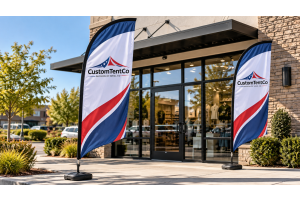
Trade Show Display Ideas to Attract More Visitors to Your Booth

Trade shows give businesses a valuable opportunity to showcase products, meet potential customers, build partnerships, and generate sales leads. However, with numerous exhibitors competing for attention, creating a booth that visitors notice can be challenging.
An effective trade show display does more than look attractive. It communicates your brand message, highlights your products, and gives attendees a reason to stop and engage with your team.
The good news is that you do not always need an expensive exhibition stand to make an impact. With thoughtful design, consistent branding, and a clear visitor experience, you can create a professional booth that supports your marketing goals.
Here are 10 trade show display ideas to help your business stand out at its next exhibition.
1. Create a Strong Visual Focal Point
When attendees walk through an exhibition hall, they often decide quickly which booths deserve their attention. Your display should communicate your brand and main offering at a glance.
Start by choosing one primary visual focal point, such as a large fabric backdrop, a prominent product display, or a branded counter.
To make your booth easier to recognize:
-
Place your logo where it can be seen from the aisle.
-
Use consistent brand colors.
-
Highlight one primary message.
-
Choose high-quality images and graphics.
-
Avoid filling every surface with text.
Your headline should explain what your business offers or why visitors should care. A short, benefit-focused message is generally easier to understand than a long list of services.
Before finalizing your design, review it at different viewing distances to check that the most important information remains readable.
2. Use Custom Fabric Displays for Professional Branding
A printed fabric backdrop can create a clean, cohesive background for your booth. It provides space for your logo, product imagery, campaign messaging, and other brand elements.
Fabric displays can be particularly useful for businesses that attend multiple exhibitions and want a consistent presentation.
When selecting a display, consider:
-
Available display dimensions
-
Print quality and color consistency
-
Frame construction
-
Assembly and transport requirements
-
Storage options
-
Compatibility with your booth layout
Choose graphics that support your main marketing objective rather than trying to communicate every detail about your company on one backdrop.
You can explore custom trade show displays to find options that suit your event space and branding requirements.
3. Build a Booth Around Your Products
If your business sells physical products, make them an important part of the display rather than relying entirely on printed graphics.
An effective product-focused booth allows visitors to see what you offer and understand its key benefits.
Consider these approaches:
Feature your best products. Highlight a small selection of relevant products rather than overcrowding the display.
Create a demonstration area. If your product benefits from a live demonstration, reserve enough room for visitors to watch comfortably.
Use clear product information. Short descriptions, labels, and comparison charts can help visitors understand the differences between options.
Keep products accessible. Arrange items so visitors can view them without blocking walkways or interfering with staff.
The objective is to make your products easy to understand and encourage meaningful conversations with interested attendees.
4. Combine Backdrops With Banner Stands
A backdrop can establish your main brand message, while banner stands provide additional space for specific products, services, or promotions.
This combination can work well when your business offers several solutions or wants to tailor its messaging to different audiences.
For example, your main backdrop could introduce your company, while a banner stand highlights a particular product category or customer benefit.
For a coordinated appearance:
-
Use matching colors and typography.
-
Keep each display focused on one message.
-
Position banners where they do not obstruct visitor movement.
-
Avoid repeating the same information across every surface.
-
Check the venue's display and height restrictions.
A smaller number of coordinated displays often looks more professional than a booth crowded with unrelated banners.
5. Add a Branded Counter or Table
A counter or promotional table gives your team a practical place to greet visitors, demonstrate products, and organize brochures or samples.
A custom table cover can make this functional area part of your overall branding.
To improve the presentation, use a fitted or appropriately sized cover, keep the tabletop organized, and position your logo where it remains visible.
Useful items to include may be:
-
Product samples
-
Brochures or catalogs
-
Business cards
-
A tablet for demonstrations
-
A QR code linking to a relevant landing page
Avoid using the table as a storage area for boxes, bags, and unrelated materials. A tidy display helps visitors focus on your products and your team.
6. Use Lighting to Highlight Important Features
Lighting can help draw attention to specific parts of your booth, particularly in exhibition halls where the surrounding environment may be visually busy.
Depending on venue rules and your display configuration, you could use suitable lighting to highlight product samples, printed graphics, or a demonstration area.
Before adding lighting, consider:
-
Whether the venue provides power
-
Whether additional electrical equipment is permitted
-
How the lighting affects color accuracy
-
Whether cables can be safely managed
-
Whether the display creates glare for visitors
Keep lighting comfortable and purposeful. The goal is to make your products and graphics easier to see, not to overwhelm neighboring exhibitors or visitors.
7. Create an Interactive Experience
Interactive elements can encourage visitors to spend more time at your booth and learn more about your offering.
Choose activities that are relevant to your products and target audience.
Ideas include:
-
Live product demonstrations
-
Short educational presentations
-
Hands-on product trials
-
Digital product configurators
-
Simple quizzes related to your industry
-
Scheduled consultations with your team
Make participation straightforward and ensure the activity can be managed without creating congestion.
An interactive display should support your business objective. For example, if your goal is lead generation, connect the experience to a relevant follow-up offer or consultation rather than collecting contact details without a clear purpose.
8. Incorporate QR Codes and Digital Content
QR codes can connect your physical booth with your online marketing materials. They allow interested visitors to access additional information without carrying printed catalogs.
You could link a QR code to:
-
A product page
-
A digital catalog
-
A demonstration video
-
A booking form
-
A downloadable product guide
-
A campaign-specific landing page
Use a short instruction such as “Scan to explore our products” so visitors understand what they will get.
Make sure the destination page loads quickly on mobile devices and contains information relevant to the display.
If you want to measure results, use a trackable URL and review scans, landing-page visits, and subsequent inquiries. A QR code is most useful when it leads to a clear next step.
9. Make Your Booth Comfortable and Easy to Navigate
A beautiful display will not perform well if visitors cannot approach it comfortably.
Think about the visitor journey from the aisle to the main display, product area, and conversation space.
A practical layout should:
-
Keep entrances and walkways clear.
-
Make key products easy to find.
-
Leave room for visitors to stop and ask questions.
-
Avoid placing furniture in high-traffic areas.
-
Keep staff and equipment from blocking important graphics.
-
Provide an accessible route where required.
If your booth includes a product demonstration, position it so people can watch without blocking other visitors.
Review your booth dimensions and the exhibition organizer's rules before purchasing display equipment. A design that works in a large space may need adjustments for a smaller booth.
10. Design for Reuse Across Multiple Events
If your business participates in several trade shows each year, reusable displays can help create a consistent brand identity while reducing the need to start from scratch for every event.
Consider display components that can be adapted to different booth sizes and layouts.
These may include:
-
Modular display systems
-
Reusable fabric backdrops
-
Portable banner stands
-
Branded counters and table covers
-
Interchangeable graphics, where supported
-
Transport cases for protecting equipment
When comparing options, consider the initial price alongside transportation, storage, setup time, and replacement graphics.
A reusable display is most valuable when it remains practical for your event schedule and can be configured to suit different audiences.
How to Choose the Right Trade Show Display
The best display depends on your business goals, booth dimensions, product requirements, and budget.
| Your priority | Display ideas to consider |
|---|---|
| Improve brand visibility | Large branded backdrop and clear headline |
| Showcase products | Product stands and demonstration areas |
| Generate leads | QR codes, consultation space, and digital forms |
| Create a professional presentation | Coordinated backdrop, counter, and table cover |
| Make setup easier | Portable displays and organized transport cases |
| Adapt to different events | Modular displays and reusable components |
Start with your primary goal and select display elements that support it. You can add more features later if they provide measurable value.
Common Trade Show Display Mistakes to Avoid
Even a visually impressive booth can struggle if the design is difficult to understand or the visitor experience is poorly planned.
Too much text: Attendees may not have time to read long descriptions while walking through an exhibition.
Inconsistent branding: Different colors, fonts, and graphic styles can weaken your brand presentation.
Poor product placement: Important products should not be hidden behind furniture or promotional materials.
Cluttered layouts: Too many displays can make the booth feel crowded and difficult to navigate.
Unclear calls to action: Visitors should know whether to scan a code, request a quote, view a demonstration, or speak with your team.
No follow-up plan: Leads gathered at the event need timely, relevant follow-up to become meaningful sales opportunities.
Frequently Asked Questions
What makes a trade show display effective?
An effective display combines clear branding, a focused message, an organized layout, and relevant product information. It should help attendees understand your offering quickly and provide an easy way to engage with your business.
What is the best display for a small trade show booth?
A compact fabric backdrop, a banner stand, and a branded counter or table can work well in a smaller space. The best combination depends on the booth dimensions and whether you need room for product demonstrations.
How can I attract more visitors to my trade show booth?
Use clear signage, compelling product displays, interactive demonstrations, and a welcoming layout. Promoting your attendance before the event and offering a relevant reason to visit can also help.
Are reusable trade show displays worth the investment?
Reusable displays can be valuable for businesses that attend events regularly. Compare the initial purchase price with the expected frequency of use, transportation needs, storage requirements, and future graphic updates.
How do I measure trade show display performance?
Track results related to your objectives, such as qualified leads, product demonstrations, QR code scans, meetings booked, and sales opportunities. Compare these results with the cost of participating in the event.
Conclusion
A successful trade show display combines visual appeal with a clear purpose. By using consistent branding, showcasing products effectively, creating an inviting layout, and giving visitors a useful next step, your business can make better use of its exhibition space.
Start with the message you want attendees to remember. Then choose display elements that communicate that message, support your products, and fit your budget.
With thoughtful planning, reusable display equipment, and a clear lead-generation strategy, your booth can become a valuable part of your wider marketing efforts.
Planning your next exhibition? Visit CustomTentCo to explore display solutions and promotional products for your next business event.