Outdoor Event Marketing Ideas to Promote Your Business

Outdoor events give businesses an opportunity to connect with customers, demonstrate products, and build brand awareness in a lively, real-world setting. From community festivals and farmers markets to sporting events and product launches, these gatherings can help brands reach people who may not discover them through digital advertising alone.
However, simply attending an event does not guarantee results. Businesses need a clear promotional strategy, an attractive presentation, and a plan for turning visitor interest into meaningful conversations and future sales.
The good news is that effective outdoor marketing does not always require a large budget. With the right combination of branding, promotional displays, engaging activities, and follow-up, businesses can make better use of their event participation.
Here are 10 outdoor event marketing ideas to help your business stand out.
1. Create a Branded Outdoor Event Space
Your event space is often the first thing visitors notice about your business. A professional, recognizable setup can help people identify your brand and understand what you offer.
A custom canopy tent can provide a dedicated area for product displays, demonstrations, customer conversations, and promotional activities. Printing your logo and brand colors on the canopy helps create a consistent visual identity.
When planning your setup, consider:
-
Using a clearly visible business logo.
-
Choosing colors that match your brand identity.
-
Keeping the entrance open and welcoming.
-
Arranging products and promotional materials neatly.
-
Displaying a short, easy-to-understand message.
Your setup should be practical as well as attractive. Consider the event's available space, expected foot traffic, transportation requirements, and installation rules before choosing your display.
Explore custom canopy tents to consider options for creating a branded outdoor promotional area.
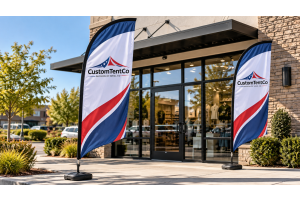
2. Use Feather Flags to Increase Visibility
At a busy outdoor event, visitors may need to spot your business from a distance before deciding to approach your booth.
Custom feather flags can help make your location more noticeable, especially when several vendors are arranged in rows or across a large event space.
For the best results:
-
Use a short headline or recognizable logo.
-
Keep the design simple and easy to read.
-
Choose contrasting colors for better legibility.
-
Position flags where the venue permits them.
-
Coordinate the flag design with your tent and other displays.
Avoid overcrowding the flag with detailed information. Its main purpose is to attract attention and help visitors recognize your business.
Learn more about custom feather flags for outdoor promotions and business events.
3. Offer Interactive Product Demonstrations
People are more likely to remember an experience than a display they simply walk past. Demonstrations can help visitors understand how your product works and why it may be useful.
Depending on your business, you could offer:
-
Live product demonstrations.
-
Short tutorials or educational sessions.
-
Product comparisons.
-
Hands-on activities.
-
Samples or trial experiences where appropriate.
Keep demonstrations short enough to accommodate visitors who are moving between event areas. Explain the main benefit first, then invite interested attendees to learn more.
If your product is complex, use a simple visual demonstration rather than relying entirely on a long verbal explanation.
4. Make Your Promotional Table More Effective
A promotional table can serve as a central point for product displays, brochures, samples, and conversations with potential customers.
A coordinated custom table cover can make the setup look more professional while reinforcing your branding.
To create an effective display:
-
Place your most important products at eye level where practical.
-
Keep brochures and business cards organized.
-
Use clear labels for products or demonstrations.
-
Leave enough room for visitors to interact comfortably.
-
Avoid filling every inch of the table with materials.
Consider adding a QR code that directs visitors to a product page, special offer, booking form, or newsletter signup.
The goal is to make it easy for people to understand your offering and take the next step.
Explore custom tablecloths to coordinate your promotional table with the rest of your event setup.
5. Run a Simple Contest or Giveaway
A relevant contest or giveaway can encourage people to stop at your booth and interact with your brand.
The key is to connect the activity to your business rather than choosing a prize solely because it attracts a large crowd.
For example, a business could offer a product sample, a branded item, a discount on a future purchase, or entry into a prize draw where permitted.
Before launching a promotion:
-
Decide what business goal the activity should support.
-
Choose a prize relevant to your target customers.
-
Explain the participation process clearly.
-
Collect only the information you genuinely need.
-
Follow applicable event rules, privacy requirements, and contest regulations.
Measure the quality of the interactions, not just the number of participants. A smaller group of relevant potential customers can be more valuable than a large number of people with no interest in your products.
6. Create a Photo-Friendly Brand Experience
A visually interesting event space can encourage visitors to take photographs and share their experience on social media.
You could create a branded photo area, an attractive product display, or a simple backdrop that incorporates your business identity.
To make the experience work:
-
Keep the area visually clean.
-
Use consistent brand colors and graphics.
-
Make the space comfortable and easy to access.
-
Add a subtle social media call to action.
-
Ask permission before featuring identifiable visitors in promotional content.
If you encourage visitors to post online, provide a simple branded hashtag or social media handle. Do not require people to share personal information unnecessarily.
A photo-friendly setup can extend your event's reach beyond the people physically attending it.
7. Promote Your Event Before It Begins
Outdoor event marketing should start before the event itself.
Pre-event promotion helps existing customers know where to find you and gives potential visitors a reason to stop by.
Use your existing marketing channels to announce your participation.
Social media: Share event details, preparation photos, product highlights, and a preview of your display.
Email marketing: Inform subscribers about your location, activities, demonstrations, or event-only offers.
Website: Publish an event announcement or add the details to a relevant landing page.
Local partnerships: Coordinate with event organizers, neighboring vendors, or community organizations where appropriate.
Include the event date, location, opening hours, and any important visitor information. Keep the message focused on what people will gain by visiting your space.
8. Use QR Codes to Connect Offline Visitors With Online Content
A well-placed QR code can bridge the gap between a physical event and your digital marketing channels.
Instead of asking visitors to remember a long website address, give them a convenient way to access relevant information on their phones.
A QR code could lead to:
-
A product or service page.
-
A downloadable product guide.
-
An appointment booking page.
-
A newsletter signup form.
-
A promotional landing page.
-
A digital catalog.
Place the code where visitors can scan it comfortably, and include a short explanation of what they will receive.
For example, a sign could say, “Scan to explore our product range.”
Test the QR code before the event and ensure the destination page works well on mobile devices. If you want to measure campaign performance, use a trackable URL with appropriate analytics parameters.
9. Build Partnerships With Other Event Participants
Collaborating with relevant businesses can help you reach new audiences and create a more engaging event presence.
Look for partners whose products or services complement yours without directly competing for the same customers.
Possible collaborations include:
-
Joint product demonstrations.
-
Shared promotional activities.
-
Co-branded event announcements.
-
Cross-promotion on social media.
-
Referral offers for relevant customers.
For example, a business selling outdoor equipment might collaborate with a complementary local service provider during a community event.
Agree on responsibilities, promotional messaging, and how leads will be handled before the event begins. Partnerships work best when both businesses receive clear value from the collaboration.
10. Follow Up With Leads After the Event
The marketing opportunity does not end when the event closes. Timely follow-up can turn a useful conversation into a future customer relationship.
Create a simple process for organizing contacts and recording what each visitor was interested in.
After the event:
-
Categorize leads based on their needs and level of interest.
-
Send relevant information or promised resources.
-
Follow up with visitors who requested a quote or consultation.
-
Invite interested prospects to explore related products.
-
Review which promotional activities generated the strongest leads.
Personalize follow-up messages where possible. A visitor who asked about one particular product should receive information relevant to that interest rather than a generic message about your entire business.
Only contact people in ways permitted by the consent they provided and applicable marketing and privacy laws.
How to Choose the Right Outdoor Marketing Strategy
Not every tactic suits every business. Choose your activities according to your goals, audience, event format, and budget.
| Marketing goal | Strategy to consider |
|---|---|
| Improve brand visibility | Custom canopy tent and feather flags |
| Showcase products | Live demonstrations and organized product displays |
| Generate leads | QR codes, consultations, and relevant sign-up forms |
| Increase social media exposure | Photo-friendly displays and event content |
| Build customer relationships | Giveaways, conversations, and personalized follow-up |
| Reduce future event costs | Reusable branded displays and accessories |
Start with two or three activities that directly support your primary goal. You can test additional ideas at future events and invest more in the strategies that produce measurable results.
Common Outdoor Event Marketing Mistakes to Avoid
Even a well-planned event campaign can underperform when basic details are overlooked.
Unclear messaging: Visitors should be able to understand what your business offers without reading a long paragraph.
Poor booth visibility: A display that blends into the surroundings may be difficult to find in a crowded venue.
Too many promotional materials: Excessive signage and clutter can make the booth feel confusing and uninviting.
Ignoring event restrictions: Always check the rules for signage, tent installation, anchoring, power, and promotional activities.
No lead collection plan: If you have no way to follow up with interested visitors, you may lose valuable opportunities.
Skipping performance measurement: Without tracking results, it becomes difficult to identify which activities deserve investment at future events.
Frequently Asked Questions
What are the best outdoor event marketing ideas for small businesses?
Small businesses can start with a branded canopy, simple promotional signage, product demonstrations, QR codes, and relevant social media promotion. Choose activities that fit your audience and budget rather than trying to do everything at once.
How can I attract more people to my outdoor event booth?
Use clear branding, readable signage, engaging demonstrations, and a welcoming booth layout. Promoting your participation in advance and offering a relevant reason to visit can also help increase interest.
Are custom tents useful for outdoor marketing?
Custom tents can create a dedicated promotional area while displaying your business branding. Their usefulness depends on the event layout, expected conditions, setup requirements, and how frequently you plan to use them.
How do I measure outdoor event marketing success?
Track metrics related to your goals, such as qualified leads, product demonstrations, QR code scans, appointment bookings, or sales opportunities. Compare the results with the cost of participating in the event.
What should I bring to an outdoor promotional event?
Your checklist may include a branded tent, approved anchoring equipment, flags or banners, a promotional table, product samples, brochures, charging equipment, and a lead-capture method. Confirm the venue's requirements and the manufacturer's setup instructions before the event.
Conclusion
Outdoor events offer businesses a valuable opportunity to connect with customers in person, introduce products, and build brand recognition.
By combining professional displays, engaging activities, pre-event promotion, and organized follow-up, you can make your event participation more purposeful and measurable.
Start with a clear objective, choose a few marketing tactics that suit your audience, and review the results afterward. Over time, these improvements can help you build a more consistent and effective outdoor marketing strategy.
Ready to prepare for your next event? Explore CustomTentCo for custom display products that can help your business create a recognizable presence at outdoor promotions, festivals, and business events.