How to Prepare for Your First Trade Show: A Complete Exhibitor Checklist

Attending your first trade show is an exciting opportunity to introduce your business to potential customers, connect with industry professionals, and generate valuable leads. However, a successful trade show requires more than simply booking a booth and displaying your products. Careful planning, effective branding, and the right promotional materials can make a significant difference.
Whether you are a small business owner, startup, manufacturer, or marketing professional, this trade show checklist will help you prepare for a professional and productive event.
1. Define Your Trade Show Goals
Before ordering displays or preparing promotional materials, determine what you want to achieve.
Common trade show goals include:
-
Generating qualified sales leads
-
Launching a new product or service
-
Increasing brand awareness
-
Building relationships with distributors and partners
-
Meeting existing customers
-
Researching competitors and industry trends
Set measurable targets before the event. For example, you might aim to collect 50 qualified leads, schedule 10 follow-up meetings, or demonstrate a new product to 30 potential buyers.
Clear goals will help you make better decisions about your booth design, staffing, and promotional strategy.
2. Plan Your Trade Show Budget
A realistic budget helps prevent unexpected expenses and keeps your event investment under control.
Consider including these costs:
-
Booth space and registration fees
-
Booth displays and branded graphics
-
Travel, accommodation, and transportation
-
Product samples and promotional materials
-
Shipping, installation, and dismantling
-
Staff meals and other event expenses
Reusable displays can help businesses manage costs across multiple events. For example, a portable fabric backdrop, branded table cover, or modular display can be used at different exhibitions with appropriate updates to the graphics and layout.
3. Choose the Right Booth Setup
Your booth is often the first physical interaction visitors have with your brand. It should communicate what your business offers while making it easy for people to approach your team.
When planning your booth, consider the available floor space, expected visitor traffic, product requirements, and event guidelines.
Useful display options include:
-
Fabric backdrops: Create a consistent branded background for your booth.
-
Banner stands: Highlight key products, services, or promotional messages.
-
Branded table covers: Give demonstration tables and product counters a professional appearance.
-
Modular displays: Help businesses create flexible booth configurations.
-
Promotional counters: Provide space for product demonstrations, brochures, and conversations.
Choose displays that fit your booth dimensions and can be transported, assembled, and stored conveniently.
4. Prepare Your Branding and Promotional Materials
Consistent branding helps visitors recognize and remember your business. Use your logo, brand colors, typography, and messaging across your booth materials.
Before sending artwork for printing, check that:
-
Your logo is clear and high resolution.
-
Important text is readable from an appropriate distance.
-
Contact information is correct.
-
Website addresses and QR codes work.
-
Product images are sharp and relevant.
-
Printed colors and graphics follow your brand guidelines.
Avoid overcrowding your displays with too much information. Focus on a clear headline, your main value proposition, and one obvious next step for interested visitors.
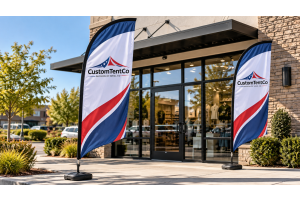
Custom canopy tents, table covers, feather flags, and fabric displays can also help create a coordinated look when your event includes both indoor and outdoor activities.
5. Create a Product Demonstration Plan
A good demonstration gives visitors a reason to stop and engage with your team.
Select the products or services that best represent your business. Prepare a short demonstration that explains the problem your offering solves, its main benefits, and what makes it different.
If you are showcasing physical products, bring samples that are easy to handle and display. If your business offers services, prepare a concise presentation, case study, or portfolio on a tablet or screen.
Rehearse the demonstration before the event and make sure your team can deliver it consistently.
6. Train Your Booth Staff
Your booth staff play an important role in turning visitors into potential customers.
Before the show, make sure everyone understands the event goals, key product information, pricing policies, and lead collection process.
Train your team to:
-
Greet visitors naturally and professionally.
-
Ask questions to understand customer needs.
-
Explain the main benefits of your products.
-
Demonstrate products confidently.
-
Record useful lead details.
-
Identify visitors who need immediate follow-up.
Avoid letting staff spend the entire event looking at their phones or waiting passively behind a table. Friendly, proactive engagement can encourage more meaningful conversations.
7. Organize Lead Capture and Follow-Up
Collecting business cards is not enough if you cannot remember the conversations behind them. Establish a simple system for capturing and organizing leads.
Depending on your audience and event, you can use a lead retrieval tool, a customer relationship management (CRM) system, or a digital form.
Record useful information such as:
-
Visitor name and company
-
Contact details and preferred communication method
-
Products or services of interest
-
Purchase timeline
-
Specific requirements discussed
-
Agreed next steps
Create a follow-up plan before the event begins. Prioritize high-intent prospects and send relevant, personalized messages after the show, respecting applicable privacy and marketing requirements.
8. Promote Your Attendance Before the Event
Do not wait until the exhibition opens to tell people you will be there. Pre-event promotion can help attract existing customers and new prospects to your booth.
Consider these activities:
-
Announce your attendance on LinkedIn and other relevant social channels.
-
Email customers and prospects with your booth number.
-
Invite key contacts to schedule a meeting.
-
Publish a preview of the products you will showcase.
-
Share event-related content using the official event hashtag when appropriate.
If you have a new product or special demonstration planned, mention it in your invitations to give people a compelling reason to visit.
9. Pack an Essential Trade Show Kit
Small missing items can create unnecessary stress during setup. Prepare a checklist and pack your materials well before departure.
Your kit may include:
-
Booth graphics and display hardware
-
Branded table covers and signage
-
Product samples and demonstration equipment
-
Business cards and brochures
-
Laptop, tablet, chargers, and power adapters
-
Approved extension cords and cable-management supplies
-
Cleaning cloths, tape, scissors, and basic tools
-
Lead collection materials
-
Staff contact details and event documentation
Confirm shipping deadlines, venue delivery rules, setup hours, electrical requirements, and restrictions on hanging signs or other booth structures.
10. Review Your Results After the Event
Your work does not end when the exhibition closes. Reviewing performance helps you understand whether the event achieved its objectives and what to improve next time.
Track metrics such as:
-
Number of qualified leads
-
Meetings booked
-
Product demonstrations completed
-
Follow-up responses
-
Sales opportunities created
-
Revenue attributed to the event, where measurable
Gather feedback from booth staff while the experience is still fresh. Identify which displays attracted attention, which messages generated conversations, and which materials were unnecessary.
Use these insights to improve your booth layout, promotional messaging, and event budget for future exhibitions.
Final Trade Show Preparation Checklist
Before leaving for your first trade show, confirm that you have:
-
Defined your event goals and budget.
-
Reserved and reviewed your booth space.
-
Selected the appropriate displays and branded graphics.
-
Checked artwork, contact information, and QR codes.
-
Prepared product samples and demonstrations.
-
Briefed and trained your booth staff.
-
Set up a lead capture and follow-up process.
-
Promoted your attendance to relevant audiences.
-
Packed essential equipment and event documents.
-
Scheduled time to review results after the event.
Make Your First Trade Show Count
A successful trade show starts with thoughtful preparation. By setting clear goals, choosing the right displays, training your team, and planning your lead follow-up process, you can create a more professional experience for visitors and make better use of your event investment.
Custom-branded displays, table covers, canopy tents, and promotional signage can help your business present a consistent image across exhibitions and events. Choose products that suit your space, brand, and practical requirements, and prepare early so you can focus on building valuable business relationships when the show begins.