How to Plan a Successful Outdoor Brand Activation

Outdoor brand activations give businesses an opportunity to connect with customers in real-world environments. From community festivals and sporting events to product launches and shopping center promotions, these experiences allow brands to interact directly with their target audiences.
Unlike traditional advertising, an outdoor brand activation encourages people to engage with your business through product demonstrations, interactive experiences, samples, and face-to-face conversations.
However, a successful activation requires more than setting up a promotional booth. You need a clear strategy, an engaging event space, effective branding, and a plan for measuring results.
In this guide, we explore how to plan an outdoor brand activation that attracts attention, encourages participation, and creates memorable customer experiences.
1. Define Your Brand Activation Goals
Start by identifying what you want your activation to achieve. Your objectives will influence the event location, promotional materials, activities, and budget.
Common goals include:
-
Increasing brand awareness among local audiences
-
Introducing a new product or service
-
Generating qualified sales leads
-
Encouraging product trials and demonstrations
-
Building relationships with existing customers
-
Increasing social media engagement
-
Driving visitors to a website or retail location
Set measurable targets before the event. For example, you might aim to collect 100 customer registrations, distribute 200 product samples, or generate 50 qualified leads.
Having clear objectives makes it easier to evaluate the success of your campaign.
2. Understand Your Target Audience
An effective brand activation is designed around the people you want to reach.
Consider your audience's age range, interests, location, shopping habits, and reasons for attending the event.
For example:
-
A fitness brand might target runners at a sporting event.
-
A food business might connect with visitors at a community festival.
-
A technology company might organize interactive demonstrations at an industry exhibition.
-
A local retailer might create a promotional experience at a shopping center.
Understanding your audience helps you choose the right event, develop relevant activities, and create messaging that resonates with potential customers.
3. Choose the Right Event Location
Location can significantly influence how many people interact with your activation.
Look for venues that attract your target audience and offer suitable space for your promotional setup.
Potential locations include:
-
Community festivals
-
Sporting competitions
-
Outdoor markets
-
Shopping centers
-
University events
-
Corporate gatherings
-
Product launches
-
Industry exhibitions
Before confirming a location, review the expected attendance, booth dimensions, accessibility, electricity availability, installation rules, and weather considerations.
Also consider how visitors will move through the venue. A location with good visibility and natural foot traffic can make it easier for people to discover your activation.
4. Create an Attractive Branded Event Space
Your event setup should make your business recognizable from a distance while providing a welcoming space for visitors.
A coordinated promotional environment can include several branded display products.
Custom canopy tents
A custom canopy tent can create a recognizable event space while providing shelter for staff, visitors, and promotional materials. It is particularly useful for outdoor markets, festivals, sporting events, and community promotions.
Choose a size that accommodates your team, products, and visitor activities.
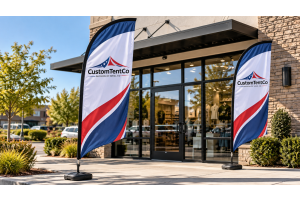
Feather flags
Feather flags add height and visibility to outdoor activations. Position them near your booth or event entrance where permitted to help visitors identify your location.
Branded table covers
A custom table cover gives your promotional counter a professional appearance. It also provides additional branding space for your logo and visual identity.
Inflatable displays
Inflatable arches, tents, and promotional structures can create a distinctive visual feature at large outdoor events. They can be useful for product launches, sporting events, and brand experiences where visibility is important.
Promotional banners
Banners can communicate your campaign message, product benefits, or event information. Keep the design simple and make sure the main message can be understood quickly.
When combining multiple products, maintain consistent colors, logos, and visual elements to create a unified brand experience.
5. Design Interactive Experiences
The most memorable brand activations encourage people to participate rather than simply look at a display.
Consider activities that are relevant to your products and audience.
Some ideas include:
-
Live product demonstrations
-
Interactive games and competitions
-
Product sampling
-
Photo opportunities
-
Giveaways and promotional contests
-
Short educational workshops
-
Hands-on product experiences
-
QR-code-based registrations or offers
For example, a fitness business could create a small activity area where visitors try a product. A technology brand could offer a live demonstration that allows people to explore its latest features.
Keep activities simple, accessible, and easy to understand. Visitors should quickly know how to participate.
6. Develop Clear and Consistent Branding
Your brand should be recognizable across every element of the activation.
Use consistent branding on your canopy tent, feather flags, banners, table covers, staff clothing, brochures, and promotional materials.
Follow these design principles:
-
Use your official logo consistently.
-
Choose colors that match your brand identity.
-
Keep promotional messages short.
-
Use high-quality product and lifestyle images.
-
Maintain readable typography.
-
Highlight one primary call to action.
Avoid placing too much information on individual displays. A clear message and strong visual identity are usually more effective than overcrowded graphics.
7. Prepare Your Team and Promotional Materials
Your staff represent your brand throughout the activation. Make sure they understand the campaign objectives and know how to interact with visitors.
Before the event, prepare:
-
Staff roles and schedules
-
Product information and demonstration instructions
-
Promotional brochures and samples
-
Business cards and contact details
-
Lead collection forms or digital tools
-
Giveaway materials
-
Setup and safety instructions
Train your team to welcome visitors, answer common questions, explain product benefits, and record useful customer information.
A friendly and knowledgeable team can turn a brief interaction into a valuable business opportunity.
8. Promote Your Activation Before the Event
Pre-event marketing helps build awareness and encourages people to visit your activation.
Use your existing marketing channels to announce your participation.
Consider:
-
Posting event announcements on social media
-
Sharing behind-the-scenes preparation photos
-
Emailing customers and prospects
-
Publishing event details on your website
-
Partnering with event organizers
-
Inviting customers to attend a product demonstration
Include useful information such as the event date, location, booth number, and planned activities.
You can also create a unique campaign hashtag or encourage visitors to share their experiences online.
9. Prepare for Weather and Outdoor Conditions
Outdoor activations require additional planning because weather and ground conditions can affect your display setup.
Before the event:
-
Check the forecast and venue conditions.
-
Select products suitable for the expected environment.
-
Follow manufacturer instructions for installation.
-
Use appropriate tent weights, anchors, and bases.
-
Protect promotional materials from rain and moisture.
-
Keep electrical equipment safe and properly managed.
-
Follow venue instructions during severe weather.
Never assume that a promotional tent or sign is suitable for every weather condition. Safety should take priority over keeping a display open.
10. Measure Your Brand Activation Results
After the event, review whether the activation achieved its goals.
Useful performance indicators include:
-
Number of visitors who interacted with your booth
-
Product demonstrations completed
-
Samples distributed
-
Leads and registrations collected
-
QR-code scans
-
Social media mentions and engagement
-
Follow-up meetings booked
-
Sales opportunities generated
Ask your team for feedback about visitor behavior, popular activities, and any challenges during the event.
Use these insights to identify what worked well and what could be improved for your next activation.
Final Thoughts
A successful outdoor brand activation combines thoughtful planning, engaging experiences, consistent branding, and the right promotional displays.
By understanding your audience, selecting a suitable location, creating an attractive event space, and encouraging meaningful interaction, your business can make a stronger impression on potential customers.
Custom canopy tents, feather flags, branded table covers, banners, and inflatable displays can help create a recognizable promotional environment. Choose products that fit your campaign objectives and venue requirements, and give visitors a clear reason to engage with your brand.
With the right preparation and follow-up strategy, outdoor brand activations can become a valuable part of your business marketing efforts.