How to Choose the Best Custom Canopy Tent for Trade Shows, Festivals, and Outdoor Events

A successful outdoor event is about more than showing up. Businesses need a professional space where visitors can discover their products, ask questions, and interact with their brand. A custom canopy tent can help create that space while providing shade, shelter, and valuable brand visibility.
Whether you are preparing for a trade show, farmers market, community festival, sporting event, or product promotion, choosing the right canopy tent can make a difference in how your business is presented.
But with different sizes, materials, printing options, and accessories available, how do you select the best tent for your needs?
This guide explains the key factors to consider when choosing a custom canopy tent for your business.
1. Identify How You Will Use Your Canopy Tent
Before choosing a size or design, determine where and how you plan to use your tent. Your intended use will influence the frame, canopy material, portability, and branding options you need.
Common applications include:
-
Trade shows: Create a dedicated booth for product demonstrations, lead generation, and customer conversations.
-
Farmers markets: Display products and signage in a recognizable, organized space.
-
Outdoor festivals: Establish a branded area where attendees can learn about your business.
-
Sporting events: Promote your organization, team, sponsors, or products.
-
Corporate events: Provide a professional space for customer engagement, employee activities, and promotional campaigns.
-
Retail promotions: Increase brand visibility during outdoor sales and product launches.
Make a list of the locations where you will use the tent most often. A tent used at frequent local markets may require different features from one designed primarily for large corporate events.
2. Choose the Right Canopy Tent Size
Tent size affects your available working space, display layout, transportation needs, and overall event setup.
10×10 Canopy Tent
A 10×10 canopy tent is a popular option for small businesses, vendors, and exhibitors who need a compact promotional area.
It can work well for farmers markets, local festivals, sampling events, and smaller trade show spaces. The footprint is relatively easy to plan around, and the tent can accommodate a counter or table, marketing materials, and staff.
10×20 Canopy Tent
A 10×20 canopy tent provides twice the ground footprint of a 10×10 tent. It can be useful for businesses that need additional room for product displays, customer queues, demonstrations, or multiple tables.
This size may also suit events where visitors need space to browse without crowding the staff area.
Larger Canopy Tents
Larger configurations can support bigger activations, hospitality areas, and multi-purpose event spaces. However, they generally require more transportation capacity, setup planning, and suitable installation space.
Before ordering, check the event's permitted footprint and confirm whether the dimensions refer to the canopy's overall coverage or its ground footprint.
3. Select Durable Frame and Canopy Materials
The frame and canopy fabric influence the tent's stability, portability, appearance, and expected service life.
Frame considerations
Common frame materials include aluminum and steel. Aluminum frames are often valued for their lighter weight and portability, while steel frames may be suitable for applications where a heavier structure is acceptable.
Compare the frame's construction, joint design, hardware, setup mechanism, and manufacturer's guidance rather than selecting a tent based on material alone.
Canopy fabric considerations
Look for canopy fabric that suits your event environment and printing requirements. Important factors include:
-
Resistance to fading under normal use
-
Fabric strength and construction
-
Print quality and color consistency
-
Ease of cleaning and storage
-
Suitability for the expected weather conditions
Ask the supplier about fabric specifications, care instructions, and any available warranties. No canopy should be assumed to withstand every weather condition.
4. Make Branding a Priority
One of the main advantages of a custom canopy tent is the opportunity to display your brand in a prominent location.
A plain tent can provide shelter, but a thoughtfully designed branded tent can help visitors identify your business from a distance.
Consider these branding elements:
Logo placement: Position your logo where it is easy to see from the main visitor approach. Check visibility from multiple sides.
Brand colors: Use colors that align with your established brand identity. Consistency across your tent, banners, uniforms, and marketing materials can create a more professional appearance.
Readable messaging: Keep text concise. Your business name, a short value proposition, or a website address is usually more useful than a crowded list of services.
Full-canopy printing: Depending on the product, printing may be available on the canopy top, valances, or other fabric panels. Confirm the available print areas before finalizing your design.
Supporting graphics: Custom sidewalls, banners, and flags can extend your visual identity beyond the canopy roof.
Before production, review the artwork proof carefully. Check spelling, logo proportions, color accuracy, and the placement of important design elements.
5. Consider Custom Sidewalls and Accessories
Accessories can help you adapt your canopy tent to different event layouts and customer needs.
Sidewalls
Sidewalls can provide additional branding space and help define your booth. Depending on the design, they may also offer some protection from wind or sun exposure.
Choose the number and type of walls based on ventilation, visibility, access, and the event environment. Follow the supplier's instructions for use in changing weather conditions.
Tables and custom table covers
A branded table cover can coordinate your display and create a consistent look. It can also help conceal storage items underneath the table.
Explore custom tablecloths to complement your canopy tent and create a more cohesive presentation.
Flags and banners
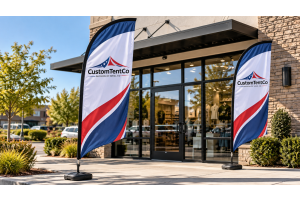
Promotional flags and banners can help people spot your booth in a busy event area. For example, custom feather flags can add height and visibility around your display, where permitted by the venue.
Choose accessories that serve a purpose instead of adding elements that make your booth feel crowded.
6. Evaluate Portability and Setup Requirements
If your business attends multiple events, portability should be an important part of your decision.
Consider the following questions:
-
Can the tent fit into your available vehicle?
-
How heavy are the frame and packed canopy?
-
Does the product include a carrying bag or transport case?
-
How many people are recommended for setup?
-
Are the assembly instructions clear?
-
Can the tent be packed away efficiently between events?
A tool-free or quick-setup design may save time for businesses that regularly travel to markets, festivals, and promotional activations.
However, do not assume every pop-up canopy can be safely assembled by one person. Follow the manufacturer's setup instructions and use the recommended number of people.
7. Plan for Outdoor Conditions and Safety
Outdoor conditions can change quickly, so choosing an appropriate tent is only part of preparing for an event.
Before using your canopy, review the venue rules and the manufacturer's guidance for wind, rain, anchoring, and safe operation.
Important precautions include:
-
Secure the tent using the anchoring method specified for the surface and conditions.
-
Use suitable weights or approved anchoring equipment where required.
-
Inspect the frame, connectors, fabric, and anchoring points before each event.
-
Avoid using the tent in conditions that exceed its stated limits.
-
Remove or lower accessories when instructed by the manufacturer.
-
Have a plan for taking down the structure if weather conditions deteriorate.
Never rely on the tent's weight alone to keep it secure. Even a canopy that appears stable can become hazardous in strong or gusty winds.
If the forecast or event conditions exceed the tent's operating limits, take it down according to the manufacturer's guidance.
8. Understand the Factors That Affect Price
The price of a custom canopy tent varies by product configuration. Comparing options based only on the initial price can lead to an unsuitable purchase.
Factors that may influence the total cost include:
-
Tent dimensions
-
Frame material and construction
-
Canopy fabric specifications
-
Printing coverage and artwork complexity
-
Sidewalls and additional accessories
-
Carrying cases and anchoring equipment
-
Shipping, production timelines, and delivery requirements
Request a quote based on the exact configuration you need. Confirm what is included in the price, whether the artwork setup is covered, and whether any additional accessories must be purchased separately.
For businesses that attend events throughout the year, it may also help to evaluate the cost per event and the expected frequency of use.
9. Create a Consistent Event Display
A canopy tent is often most effective when it is part of a coordinated display rather than a standalone structure.
For a professional presentation, consider combining:
-
A custom canopy tent with consistent brand colors
-
A table with a matching printed cover
-
A clear, uncluttered product display
-
Branded flags or banners for visibility
-
Business cards, brochures, or a QR code for follow-up
-
A simple call to action that encourages visitors to learn more
Keep pathways clear and make sure visitors can approach your staff comfortably. Place your most important message where people can see it quickly, and avoid blocking your logo with products or accessories.
10. Use This Checklist Before Ordering
Before placing your custom canopy tent order, confirm the following:
-
The tent size fits your event space.
-
The frame and fabric suit your intended use.
-
The logo and artwork have been proofread.
-
Printing coverage meets your branding goals.
-
Required sidewalls and accessories are included.
-
Transportation and storage have been considered.
-
Anchoring and setup requirements are understood.
-
Delivery timing meets your event deadline.
-
The supplier has clarified the warranty and care instructions.
Taking a few minutes to review these details can help prevent last-minute surprises and ensure your tent is suitable for your business.
Frequently Asked Questions
What size custom canopy tent is best for a small business?
A 10×10 canopy tent is often a practical starting point for small vendors and local events. Businesses needing more room for displays, demonstrations, or customer interaction may prefer a 10×20 configuration. Always confirm the available event space before ordering.
Can I print my business logo on a custom canopy tent?
Many custom canopy tents offer logo and graphic printing options. Available print areas, colors, and coverage vary by product, so review the supplier's specifications and artwork proof before production.
Are custom canopy tents suitable for repeated events?
A canopy designed for repeated use can be a useful investment when properly selected, assembled, secured, cleaned, and stored. Durability depends on the product's construction and how it is used and maintained.
Do I need sidewalls for my canopy tent?
Not necessarily. Sidewalls can provide extra branding space and help define the display, but an open canopy may be better when airflow, visibility, and easy access are priorities. Choose according to your event layout and conditions.
How early should I order a custom canopy tent?
Order early enough to allow for artwork approval, production, shipping, and any necessary corrections. Confirm the current lead time with your supplier, especially before major trade shows or seasonal events.
Final Thoughts
The best custom canopy tent is one that fits your event space, supports your branding, meets your practical requirements, and can be used safely in the environments you expect to encounter.
Start by identifying your primary use, selecting an appropriate size, evaluating materials, and planning your design. Then compare the complete configuration, including accessories, transportation, and delivery.
For businesses preparing for upcoming promotions, markets, festivals, or trade shows, a well-planned custom canopy tent can help create a recognizable and professional brand presence.
Ready to build your event display? Explore the available options at CustomTentCo and choose a canopy solution that fits your business and upcoming events.