Custom Pop-Up Tents for Small Businesses: Benefits, Uses, and Buying Tips

Small businesses often need practical ways to promote their brands, connect with customers, and stand out at local events. Whether you operate a retail store, sell products at farmers markets, attend trade shows, or organize outdoor promotions, having a professional event setup can help make your business more recognizable.
Custom pop-up tents offer a convenient way to create a branded space without building a permanent structure. With printed logos, coordinated colors, and useful accessories, a portable tent can serve as a customer-facing area for product displays, demonstrations, and conversations.
But how do you choose the right tent for your business? In this guide, we explore the benefits of custom pop-up tents, their most common uses, important features to consider, and tips for getting more value from your investment.
What Are Custom Pop-Up Tents?
Custom pop-up tents are portable canopy structures designed to provide temporary covered space at events, promotional activities, and outdoor gatherings. Many models use a collapsible frame that opens into position and supports a fabric canopy.
Customization allows businesses to incorporate their logo, brand colors, promotional graphics, and other visual elements into the tent design.
Depending on the model, printing may be available across the canopy top, valances, or optional sidewalls. The exact options vary by product, so businesses should confirm the available print areas before ordering.
Unlike a plain temporary canopy, a branded pop-up tent can perform two functions: providing a practical event space and displaying your business identity.
1. Improve Brand Visibility at Outdoor Events
One of the main advantages of a custom pop-up tent is its potential to make your business easier to recognize.
At a busy outdoor event, visitors may see several vendors offering similar products. A clear logo and consistent brand colors can help your setup stand out and make it easier for customers to locate you.
Consider using your tent at:
-
Community festivals and fairs
-
Farmers markets and craft markets
-
Sporting events and tournaments
-
Outdoor product launches
-
Local business promotions
-
Charity and fundraising events
-
Corporate gatherings
Keep your branding simple and readable. A prominent logo and concise message are generally more effective than a canopy crowded with multiple slogans and small text.
2. Create a Professional Space for Customers
A well-organized tent can make a small business look prepared and approachable.
You can use the covered area to display products, demonstrate services, distribute promotional materials, or speak with potential customers.
For example, a handmade-product business might use a tent with a neatly arranged display table. A food-related vendor, where permitted by the venue, might use the space to communicate its brand and provide an organized customer-service area.
To create a professional setup:
-
Keep the entrance open and easy to approach.
-
Arrange products so visitors can view them comfortably.
-
Use a coordinated branded table cover.
-
Display essential information clearly.
-
Keep boxes and unnecessary supplies out of sight.
-
Make sure staff can interact with customers without blocking the walkway.
The objective is to create a space that looks inviting while supporting the practical needs of your business.
3. Choose the Right Tent Size
The ideal tent size depends on your available space, the products you sell, the number of staff members, and how visitors will interact with your booth.
5×5 pop-up tents
A compact 5×5 tent may suit small promotional setups where space is limited. It can be useful for certain product demonstrations, sampling activities, or compact service stations, depending on the product's design and permitted use.
10×10 pop-up tents
A 10×10 tent is a common choice for small businesses attending markets, fairs, and outdoor promotional events. It provides room for a table, promotional materials, staff, and selected products, depending on the layout.
10×15 pop-up tents
A 10×15 tent offers additional covered space for businesses that need a larger product display or more room for customer interaction.
10×20 pop-up tents
A 10×20 tent can accommodate a more extensive display, multiple tables, demonstrations, or a larger team. It requires more setup space and may involve additional transportation and anchoring considerations.
Before selecting a size, check the event organizer's space allocation and restrictions. Also consider the packed dimensions, transport requirements, and clearance needed to assemble the tent safely.
4. Select Branding That Supports Your Marketing Goals
Custom printing is what turns a portable canopy into a branded promotional asset.
Before preparing your artwork, decide what you want people to notice first. Your business name, logo, and main offering should be easy to identify from the expected viewing distance.
Consider these design principles:
Use consistent brand colors. Choose colors that match your website, packaging, uniforms, and other marketing materials.
Prioritize your logo. Place your logo where it will be visible without being blocked by the frame or surrounding equipment.
Keep messages concise. A short tagline or value proposition can communicate more effectively than a long list of services.
Use readable typography. Select fonts and sizes that remain legible from a distance.
Review artwork carefully. Check spelling, colors, logo proportions, and print placement before approving production.
If you plan to use the same tent for different campaigns, consider a versatile design that represents your business rather than a short-term promotion that may quickly become outdated.
5. Add Accessories to Complete Your Display
A custom pop-up tent can be the foundation of your setup, but complementary accessories can make the space more functional and visually consistent.
Custom table covers
A branded table cover helps coordinate the table with the canopy and gives your display a finished appearance. It can also conceal storage items beneath the table.
Explore custom tablecloths to coordinate your promotional setup.
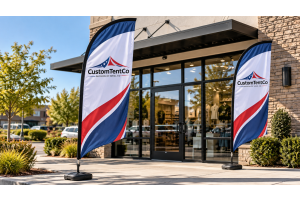
Feather flags
Flags can help visitors identify your location from farther away, particularly at events with multiple vendors. Check venue rules and use appropriate bases and anchoring for the surface and conditions.
See custom feather flags for another way to reinforce your branding.
Sidewalls
Depending on the tent model, sidewalls may offer extra branding space and help define your booth. Consider how they affect ventilation, visibility, and customer access before selecting them.
Promotional materials
Brochures, product samples, business cards, and QR codes can help visitors learn more after they leave your booth. Display only the materials that support your event goals to avoid clutter.
6. Evaluate Frame Quality and Canopy Fabric
Not all pop-up tents are designed for the same level of use. The materials and construction should match how often you plan to use the tent and the conditions you expect to encounter.
Frame construction
Compare the frame material, joint design, connectors, setup mechanism, and overall construction. Consider the balance between portability and the demands of your intended application.
A lightweight frame may be convenient for frequent transportation, while another design may be better suited to your specific setup requirements.
Canopy fabric
Review the fabric specifications, printing quality, care instructions, and expected performance. Ask the supplier about fading resistance, cleaning requirements, and any warranty coverage.
Do not assume that a printed canopy is waterproof, flame-retardant, or suitable for every weather condition unless the relevant product specifications confirm it.
Choose a product based on its documented features rather than appearance alone.
7. Consider Portability and Setup Time
For businesses that attend several events each year, transport and assembly can affect how convenient a tent is to use.
Before buying, consider:
-
How heavy the packed tent is
-
Whether a carrying bag or transport case is included
-
Whether the tent fits in your available vehicle
-
How many people are recommended for setup
-
Whether special tools are required
-
How easily the canopy and frame can be stored
-
Whether replacement parts are available
Practice setting up the tent before your first event. This helps you identify missing components and understand the assembly process without the pressure of an approaching opening time.
Always follow the manufacturer's setup instructions and use the recommended number of people.
8. Understand the Cost of a Custom Pop-Up Tent
The total cost of a custom pop-up tent depends on its specifications and the configuration you select.
Factors that may affect the price include:
-
Tent dimensions
-
Frame materials and construction
-
Canopy fabric specifications
-
Amount of printed coverage
-
Sidewalls and additional accessories
-
Carrying and transport equipment
-
Shipping and production timelines
When comparing quotes, make sure you are comparing similar configurations. One quote may include more extensive printing or accessories than another.
Ask the supplier to clarify what is included, whether artwork preparation is covered, and whether any additional fees apply.
For a business that attends multiple events, it can also be useful to estimate the cost per event over the tent's expected useful life. This provides a more practical way to assess value than looking at the initial purchase price alone.
9. Use Your Tent Across Multiple Marketing Channels
A branded pop-up tent can support more than one event. With a versatile design, you may be able to use it at markets, community gatherings, product demonstrations, and promotional campaigns.
You can also extend its marketing value through your digital channels.
For example:
-
Photograph your booth for social media.
-
Share behind-the-scenes setup content.
-
Include event photos in email newsletters.
-
Add event images to relevant website pages.
-
Use the branded tent in future promotional campaigns.
If you photograph visitors, obtain the appropriate permission before using identifiable images in marketing materials.
A consistent tent design can help connect your in-person marketing with your online brand identity.
10. Maintain Your Tent for Repeated Use
Proper care can help keep your tent presentable and ready for future events.
After each use, follow the manufacturer's cleaning and maintenance instructions.
Helpful practices include:
-
Allowing wet fabric to dry fully before storage, when conditions permit.
-
Removing dirt with approved cleaning methods.
-
Inspecting the frame and connectors for damage.
-
Checking the canopy for tears or damaged stitching.
-
Storing components in the recommended carrying case.
-
Keeping the tent in a clean, dry storage area.
-
Replacing damaged components before the next event.
Never pack away a wet canopy for an extended period, as trapped moisture may lead to mildew or fabric damage. Avoid using cleaning products that could damage the fabric or printed graphics.
Regular inspections also help identify problems before you arrive at your next event.
11. Set Up Your Tent Safely
A pop-up tent must be installed and secured appropriately for the venue and conditions. Even a well-constructed canopy can become hazardous if it is improperly anchored.
Before each event:
-
Inspect the frame, fabric, and connectors.
-
Use the anchoring system specified by the manufacturer.
-
Follow venue requirements for weights and anchoring.
-
Keep the tent away from prohibited or obstructed areas.
-
Monitor changing weather conditions.
-
Take down the tent when conditions exceed its operating limits.
Do not assume a canopy is safe in strong winds or severe weather simply because it is weighted. Follow the manufacturer's guidance for wind, rain, and other environmental conditions.
Frequently Asked Questions
Are custom pop-up tents worth it for small businesses?
They can be a useful investment for businesses that regularly attend outdoor events, markets, and promotions. A branded tent provides covered space while displaying the business identity. Its value depends on how frequently it is used and whether it meets the business's practical needs.
What size pop-up tent should I choose?
A 10×10 tent can be a practical starting point for many small vendors. A smaller tent may suit compact activities, while a 10×15 or 10×20 configuration may be more appropriate for larger displays. Confirm your event space and layout before ordering.
Can I print my logo on the entire canopy?
Printing options vary by tent model. Some products offer printing across the canopy top and valances, while other configurations may provide additional branded panels or sidewalls. Confirm the available coverage with your supplier.
How do I keep a custom pop-up tent looking good?
Follow the manufacturer's care instructions, clean the fabric using approved methods, dry it thoroughly before storage, and inspect the frame and connectors after each use. Proper storage can help protect the tent between events.
Can a custom pop-up tent be used in bad weather?
Suitability depends on the specific product and the weather conditions. Always follow the manufacturer's limits and anchoring instructions. Do not use the tent when conditions exceed its stated operating limits.
Conclusion
Custom pop-up tents can help small businesses create a recognizable, practical space for outdoor promotions, markets, and events. With the right size, durable construction, thoughtful branding, and useful accessories, a tent can become a reusable part of your marketing setup.
Start by identifying where you will use it, how much space you need, and what you want visitors to notice. Then compare the available materials, printing options, accessories, and setup requirements before making a purchase.
A well-planned event display can help your business look professional, create better customer interactions, and maintain consistent branding across multiple events.
Ready to plan your next event display? Visit CustomTentCo to explore options for custom-branded tents and complementary promotional products.